
DIY vs. Professional Commercial Roof Repair: True Costs, Hidden Risks, and Long-Term Performance
DIY repairs on commercial roofs often lead to higher long-term costs due to incorrect fixes and recurring damage. At Living Hope Roofing, we have seen how small issues grow when repairs do not address the root cause. As a commercial roofing installation company, we work with business owners who have tried quick fixes before calling professionals. Commercial flat roof repair requires accurate diagnosis, proper materials, and correct application methods. Without these, leaks return and structural damage spreads.
Reliable roofing performance protects buildings and daily operations. Many business owners attempt repairs to reduce upfront costs, but repeated failures increase total expenses. Professional commercial roofers apply established methods to minimize repeat repairs and extend roof lifespan. This article explains why DIY approaches often fail and how professional service provides better long-term value.
What Is Commercial Flat Roof Repair and Why Does It Require Precision
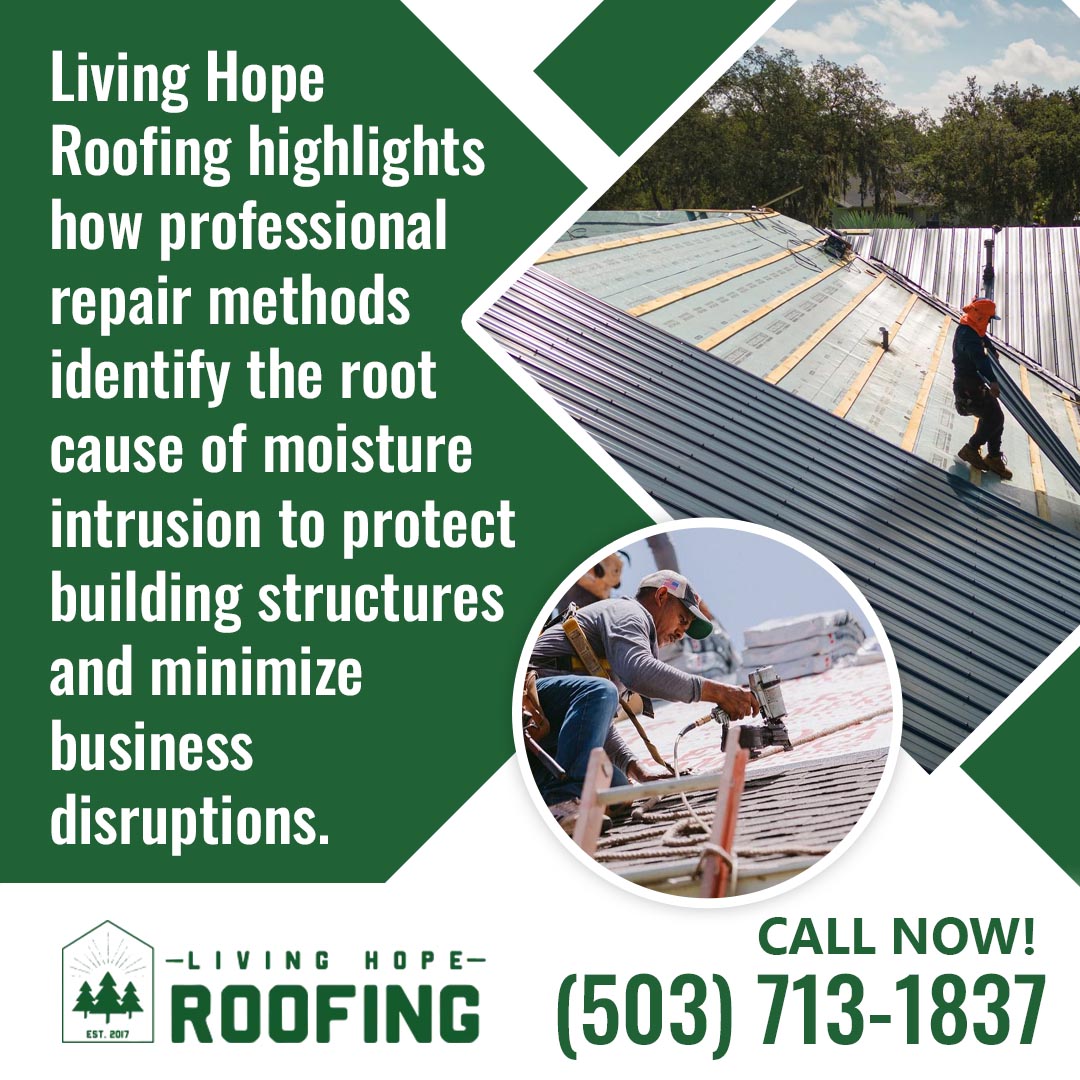
Commercial flat roof repair fixes leaks, membrane damage, and drainage issues on low-slope roofing systems. These roofing systems rely on continuous membranes rather than overlapping layers. This design limits natural water runoff. Even a small puncture or seam failure allows moisture to move beneath the surface.
Interior leaks are often visible, but the actual problem typically starts several feet away. Many commercial roofers follow structured inspection methods to locate the true source of damage. This approach reduces repeat repairs and limits further deterioration.
Common Flat Roof Systems Used in Commercial Buildings
Commercial buildings use membrane-based roofing systems designed for durability and water resistance. These systems are common in most roofing installation projects. Each material reacts differently to weather and stress. Repair methods must match the system type to maintain performance.
TPO Roofing
TPO (Thermoplastic Polyolefin) is a single-ply membrane known for heat-welded seams and energy efficiency. It is frequently found on large commercial buildings, and its reflective surface reduces heat absorption. Repairs require heat-welding tools to reseal seams. Improper sealing leads to seam separation and water entry.
EPDM Roofing
EPDM (Ethylene Propylene Diene Monomer) is a rubber roofing system designed for flexibility and weather resistance, handling temperature changes effectively. Repairs depend on adhesive bonding. Incorrect adhesives weaken the repair area and allow leaks to return.
Modified Bitumen
Modified bitumen is an asphalt-based roofing system reinforced with layers for durability, common in many roofing installation projects. It uses either heat-applied or cold-applied methods. Repairs must follow the same technique to maintain adhesion and strength.
Why Flat Roofs Demand Technical Accuracy
Flat roofs require precise repair methods to prevent water pooling and hidden leaks. Surface water tends to collect on flat systems instead of draining. Even slight leveling issues create standing water, adding stress to the membrane.
Poor repairs allow moisture to spread under the roofing layers. Over time, this damages insulation and decking. Moisture intrusion is one of the primary causes of commercial building deterioration.
Hidden Costs of DIY Commercial Flat Roof Repair
DIY repairs may look cost-effective initially, but hidden expenses often appear over time. Fixing one issue often leads to repeated problems that increase total spending.
Incorrect Problem Diagnosis
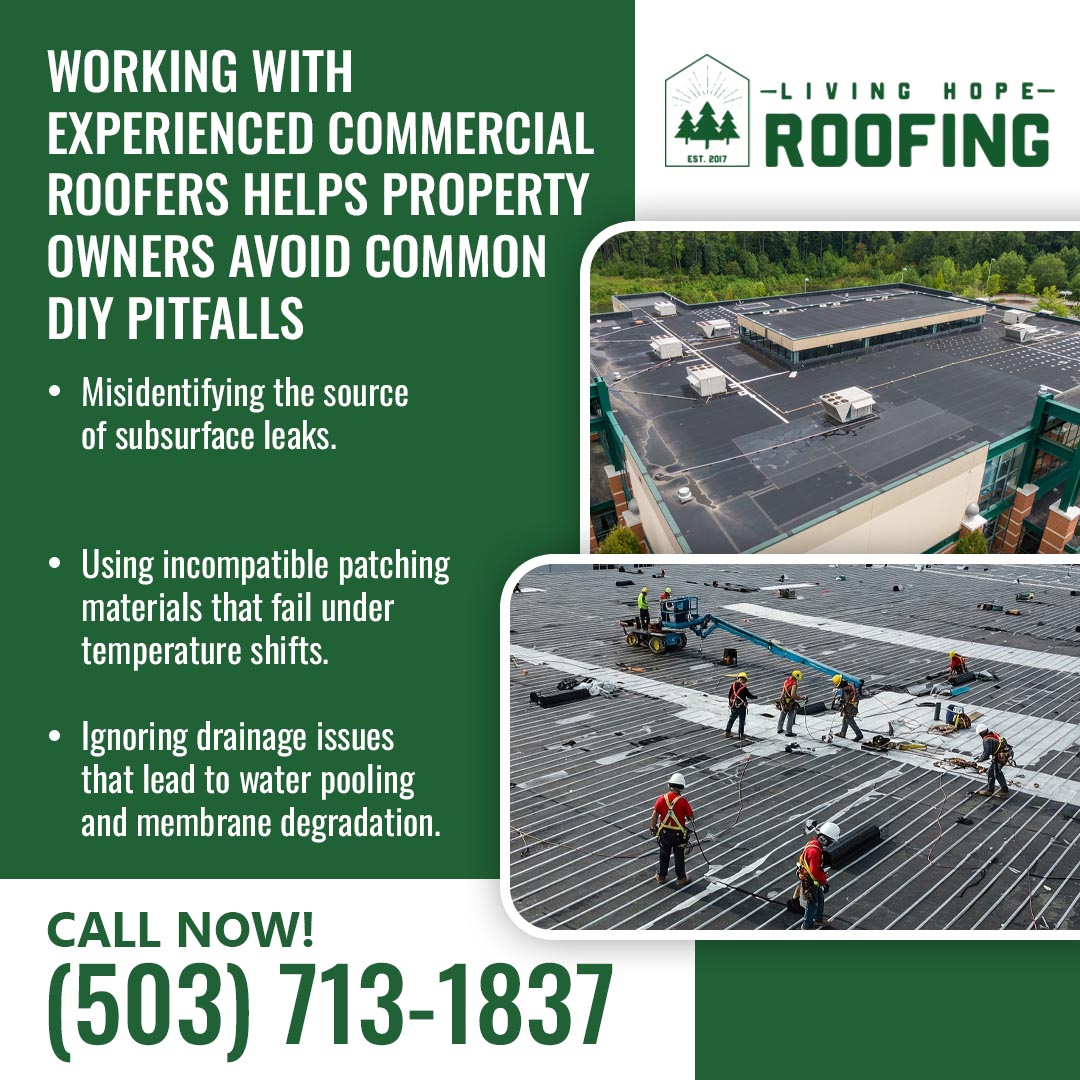
DIY repairs often misidentify the source of leaks, leading to incomplete fixes. Visible stains or drips do not always indicate the point of entry. In flat roofing systems, water often travels between layers before appearing inside, making surface-level repairs ineffective. Professional roofers use structured inspection methods such as moisture scans and seam evaluations to locate the actual entry point of water.
Common DIY diagnosis issues include:
Repairing visible damage only
Missing membrane separation
Ignoring drainage problems
Use of Improper Materials
Using incorrect materials reduces repair effectiveness and shortens roof lifespan. Each roofing system requires compatible products. TPO, EPDM, and modified bitumen all use different repair methods. General sealants often fail to bond correctly. A commercial roofing installation company selects materials that match the existing system to improve repair durability and limit premature failure.
Common material mistakes include:
Mixing incompatible sealants
Using residential-grade products
Skipping manufacturer guidelines
Short-Term Fixes That Lead to Repeat Repairs
Temporary patches fail quickly and increase total repair costs over time. Quick fixes may stop leaks for a short period. Over time, exposure to weather causes patches to weaken. This leads to repeated repair cycles.
Recurring repairs increase:
Labor costs
Material usage
Business disruption
Safety Risks and Liability Issues
DIY roof repair exposes individuals to fall hazards and potential liability risks. Commercial roofs often involve height, slope variation, and slick surfaces. Without proper safety equipment, the risk of injury increases.
Professional commercial roofers follow safety protocols, including:
Fall protection systems
Proper footwear and equipment
Trained handling of roofing tools
Hidden costs in DIY repairs often outweigh initial savings. A professional roofing company provides structured repair methods that reduce repeat issues and support long-term roof performance.
How Expert Commercial Roofers Reduce Long-Term Costs
Professional roofing services reduce repeat repairs and extend roof lifespan through accurate methods and consistent workmanship. Property owners benefit from fewer disruptions and more predictable maintenance costs over time.
Accurate Roof Inspection and Damage Identification
Professional roofers identify the exact cause of damage using structured inspection methods. Interior leaks often appear far from their actual source. Water travels across roofing layers before becoming visible. Structured inspections trace moisture paths to locate the origin of the problem.
A roofing installation company inspects membranes, seams, and drainage systems. This reduces repeat repair cycles. Identifying the root issue early helps avoid multiple repairs for the same defect.
Proper Material Selection for Climate and Structure
Professionals select materials based on building design and local weather conditions. Portland’s climate includes frequent rainfall and seasonal temperature changes. These factors affect how roofing materials perform over time. Materials must resist moisture and adapt to expansion and contraction.
Material selection also depends on roof design, slope, and exposure. Matching the correct material to these conditions supports durability and reduces early wear.
Professional Commercial Roofing Installation Standards
Professional installation follows industry standards for sealing and durability. Installation quality directly affects roof performance. Seams must be sealed correctly, and flashing must be secured at all vulnerable points.
Incorrect installation leads to early system failure. Following industry standards improves consistency and supports long-term performance across the roofing system.
Preventative Maintenance Planning
Maintenance programs detect early damage and reduce major repair costs.Routine inspections identify wear before leaks develop. Small issues can be addressed before they expand into larger problems.
Regular preventative maintenance can reduce repair costs. Living Hope Roofing, based in Wilsonville, OR, applies structured maintenance plans that support long-term roof performance.
Comparing DIY Repairs vs Professional Commercial Roofing Services
Repair decisions affect cost, safety, and long-term building performance. Comparing DIY work and professional service reveals significant impacts on property value over time.
Cost Comparison Table
Professional roofing services result in lower long-term costs compared to DIY repairs.
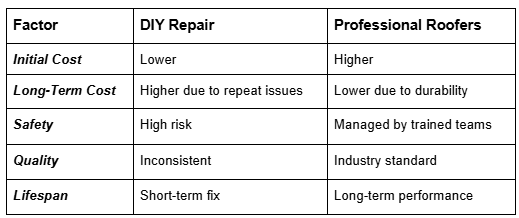
Choosing DIY repairs to reduce upfront spending often leads to repeated fixes, added material costs, and increased labor over time. Professional work focuses on solving the root issue, which reduces overall expenses.
Impact on Business Operations
Frequent roof issues disrupt operations and increase downtime. Leaks can damage inventory, equipment, and interior finishes. Paused operations during repairs affect productivity and revenue. Reliable commercial roof repair limits interruptions and supports consistent business activity.
Effect on Roof Lifespan
Professional repairs extend the roof's lifespan compared to repeated DIY fixes. DIY repairs often address visible damage only. Hidden moisture and membrane failure continue to spread. Professional repair methods target underlying problems and apply system-specific solutions. This slows material breakdown and delays full replacement.
Why Businesses in Portland Choose Living Hope Roofing
Businesses in Portland rely on roofing systems that handle constant moisture and seasonal shifts. Choosing a contractor who understands local conditions ensures the right methods are applied from the start.
Experience in Commercial Roofing Installation
Living Hope Roofing has worked on roofing projects across Portland and Tigard, Oregon. We bring hands-on experience from working on retail spaces, warehouses, and office buildings. Each structure presents different challenges, and clients benefit from a team that has already solved similar issues. As a commercial roofing installation company, we follow tested installation practices that align with building requirements and long-term performance goals.
Commercial Roof Repair Expertise
Our team handles flat roof systems using established repair methods. Flat roofs require careful handling due to drainage limitations and membrane sensitivity. We perform roof repair using system-specific techniques for TPO, EPDM, and modified bitumen. Clients receive repairs that match the existing system, which reduces the chance of recurring leaks and material failure.
High-Quality Materials for Local Climate
Materials are selected to handle Portland’s rain and temperature changes. Frequent rain and moisture exposure impact roofing systems over time. At Living Hope Roofing, we use materials designed to resist water penetration and thermal movement. This approach helps reduce wear caused by weather patterns common in the region.
Clear Communication and Project Management
Structured communication keeps clients informed throughout each project. Detailed estimates outline scope, materials, and timelines. We maintain consistent updates so the progress of every project is clear. Our process allows us to complete work efficiently while keeping disruptions to business operations minimal.
Schedule Your Commercial Roofing Assessment with Living Hope Roofing
Living Hope Roofing evaluates commercial roofs with a focus on long-term performance. Whether requiring commercial roof repair or support from a trusted roofing installation company, we address issues before they grow.
Call us at (503) 713-1837 or email [email protected] to schedule an inspection. Clients receive a clear assessment and practical solutions tailored to their building. We focus on durable results and consistent service.