
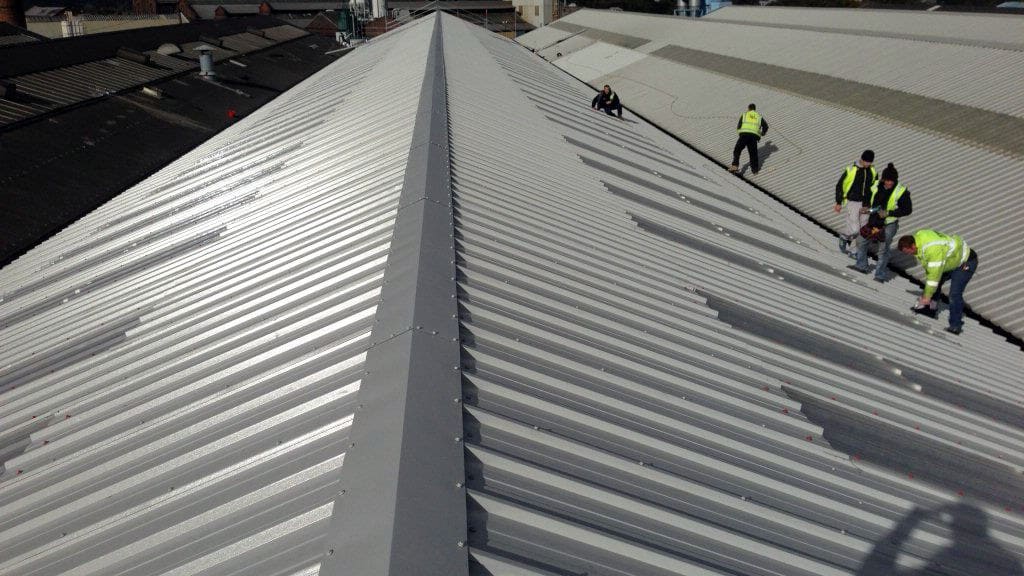
Commercial Roofing in Portland, OR: A Season-by-Season Guide to Protecting Your Investment
Portland's climate is one of the most demanding environments for roofing systems in the Pacific Northwest. With over 36 inches of annual rainfall and more than 150 wet days each year, every season puts your roof under a different kind of stress. At Living Hope Roofing, we work with commercial property owners across Portland and nearby areas to help them understand how these seasonal shifts affect the long-term performance of their roof.
Knowing what each season does to your roof is the first step toward protecting your investment. From fall debris buildup to winter moisture intrusion and summer UV exposure, each phase of the year calls for a specific response. The sections below break down what to watch for, when to act, and how to get the most out of your roofing system year-round.
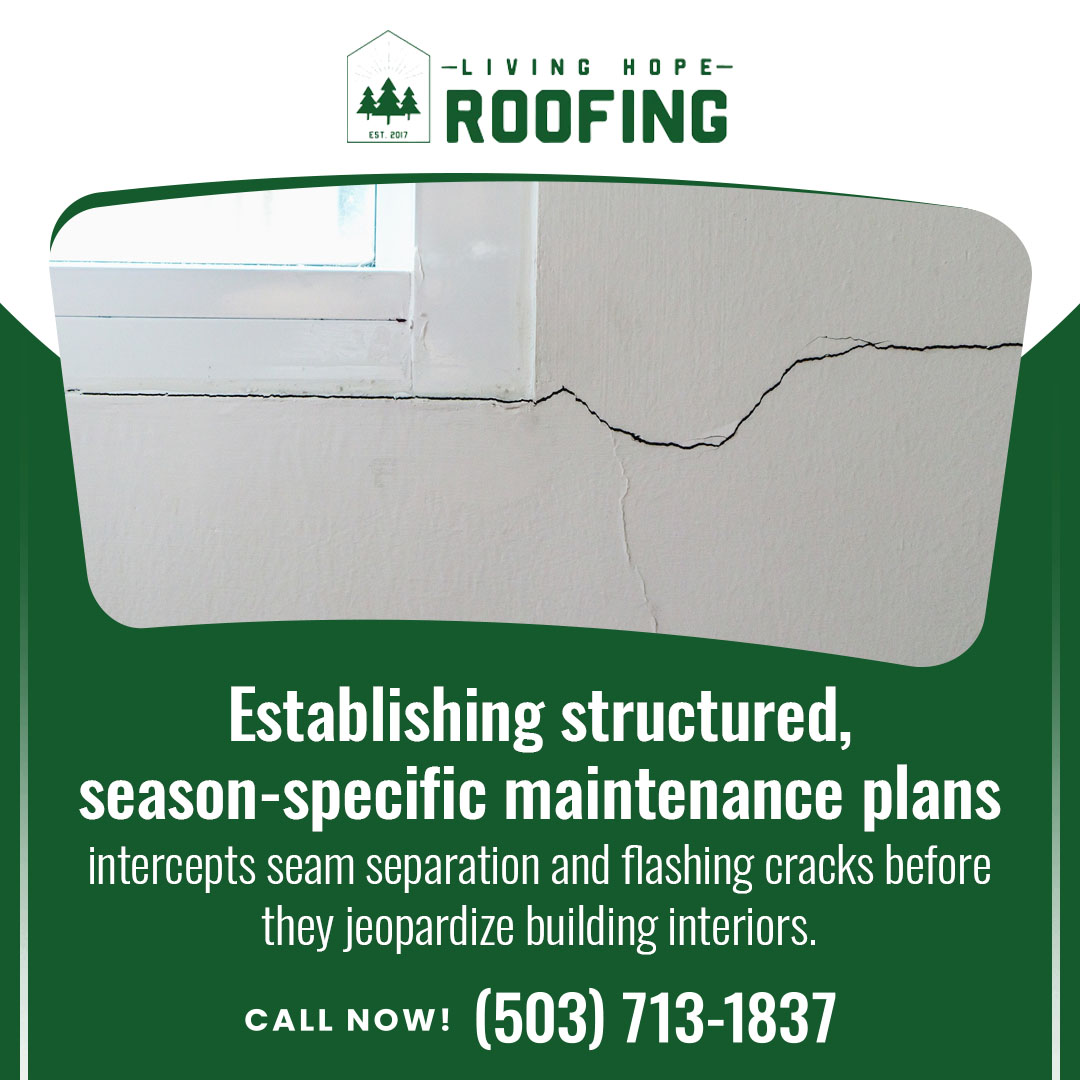
Why Portland's Weather Makes Commercial Roofing More Complex
Portland's seasonal patterns create a uniquely challenging roofing environment that commercial property owners cannot afford to ignore. The contrast between wet winters and dry summers causes roofing materials to expand and contract repeatedly, placing ongoing stress on seams, flashing, and membrane edges throughout the year.
The Scale of Portland's Rainfall Problem
Portland receives around 36 inches of rain and over 150 wet days each year, which means your roof is managing moisture for roughly five months straight during peak rain season. That sustained exposure accelerates wear on even the best-installed systems.
According to the National Roofing Contractors Association (NRCA), roof system maintenance is the single most important factor, after proper installation, for determining the life span and cost of a roof system. For Portland commercial properties, that principle holds especially true given the region's relentless wet season.
The difference between a roof that lasts 15 years and one that lasts 30 often comes down to how consistently the owner responds to seasonal changes.
How Temperature Swings Accelerate Damage
Portland winters bring overnight temperatures that regularly dip below freezing. When water sits in a small seam gap or penetration point and then freezes, it expands. That cycle, repeated over weeks, slowly widens vulnerabilities in the roofing membrane.
Summers bring the opposite problem. Extended UV exposure degrades protective coatings on metal panels and causes single-ply membranes to become more brittle over time. An experienced commercial roofing installation company that understands Portland's climate selects materials that hold up to both extremes, not just one.
How Fall Sets Up Winter Damage on Portland Commercial Roofs
Fall is the most critical season for preventative maintenance, and it is also the season most property owners underestimate.Portland's tree canopy drops substantial leaf debris onto flat and low-slope roofs from October onward, and that debris creates serious problems fast.
Blocked Drainage and Ponding Water
When leaves and debris clog roof drains, scuppers, and gutters, water has nowhere to go. Ponding water on a flat commercial roof is one of the primary causes of early membrane failure. It adds weight stress to the deck, forces water under flashing details, and keeps roofing materials saturated far longer than they were designed to handle.
Repair calls spike after Portland winters precisely because drainage issues that started in the fall go unaddressed until a leak appears inside the building. Many of these calls involve commercial flat roof repair work that could have been avoided with a simple fall drain clearing.
Fall maintenance priorities:
Clear all roof drains, scuppers, and gutters of leaves and debris
Inspect flashing around HVAC units, vents, skylights, and pipe penetrations
Check membrane seams on TPO and EPDM systems for any separation or lifting
Document the roof's condition with photos before rain season begins
Schedule a professional inspection with a trusted commercial roofing installation company before November
Safety Note:Please ensure all safety protocols are followed or utilize professional maintenance services for roof access.
Why Fall Is the Time to Repair, Not Wait
Any gap, crack, or lifting edge that exists in October will be under sustained water pressure from November through February. A minor seam repair in the fall can prevent thousands of dollars in interior water damage and insulation replacement by spring. Treating fall maintenance as optional is one of the most costly decisions a property owner can make.
Winter: Portland's Most Damaging Season for Commercial Roofs
Winter is Portland's most challenging season for commercial roofs, and its impact builds steadily from the first heavy rains through the coldest months. The extended period of wet weather puts every component of a roofing system under pressure at the same time, from membrane surfaces and seam joints to insulation layers and drainage points.
How Sustained Moisture Enters Your Building
Water does not need a large opening to cause major damage. A separated seam, a loose flashing edge, or a small puncture in a single-ply membrane is enough. Once water enters the roofing assembly, it travels laterally through insulation layers before finally reaching the interior. By the time a stain appears on a ceiling, the moisture has often been moving through the roof for weeks.
This is why commercial roofers consistently stress the importance of fall preparation. Stopping water at the membrane surface is always more cost-effective than dealing with it inside the building.
Common Winter Damage Points on Commercial Flat Roofs
The most vulnerable areas of a flat roof during Portland winters are:
Flashing around roof penetrationssuch as pipes, HVAC equipment, and skylights
Membrane seamson TPO, EPDM, and PVC single-ply systems
Low drainage areaswhere structural settling has created ponding zones
Perimeter edgeswhere wind-driven rain can work under the membrane
Experienced commercial roofers will prioritize these areas during inspections because they represent the highest probability of failure under sustained wet-season conditions.
When to Act During Winter
Do not wait for a leak to confirm a problem. If you notice any of the following, contact a qualified roofing contractor right away:
Water stains on interior ceilings or walls after a rain event
A noticeable increase in heating costs without another clear explanation
Visible moisture or frost in attic or ceiling cavity spaces
Soft or sagging areas of the roof deck when inspected from above
At Living Hope Roofing, we respond within 24 hours and can identify the source of moisture intrusion before it spreads further into the building assembly.
Spring: Assessment, Moss Control, and Post-Winter Recovery
Spring is when Portland commercial property owners see the full cost of whatever was left unaddressed the previous fall. A thorough post-winter inspection sets the tone for the roof's performance through the rest of the year and is one of the highest-value maintenance steps available.
The Moss and Algae Problem in the Pacific Northwest
Portland's damp climate and frequent shade make it one of the most moss-friendly environments in the country. Moss holds moisture against roofing surfaces long after rain stops. Over time, that trapped moisture degrades membrane surfaces, accelerates material wear, and works into seams and joints. Left untreated, moss growth shortens a roof's usable life by years.
Spring is the time to apply appropriate commercial-grade moss treatments before growth establishes itself for another season. Pressure washing is not recommended, as it damages membrane surfaces and drives moisture into existing seams.
Spring Inspection Checklist for Commercial Properties
A qualified commercial roofing installation company should conduct the spring inspection with full documentation:
Complete membrane assessment with photos of all identified issues
Seam integrity check on single-ply systems (TPO, EPDM, PVC)
Flashing condition review at all roof penetrations and perimeter edges
Insulation moisture check in areas where winter ponding occurred
Drainage performance evaluation following winter storm patterns
Treatment of all identified moss and algae growth
Safety Note: Please ensure all safety protocols are followed or utilize professional maintenance services for roof access.
Spring is also the right time to schedule a commercial roofing installation or full replacement. Planning ahead for late spring or early summer means work begins before contractor schedules fill up.
Summer: The Ideal Window for Commercial Roofing Installation in Portland
June through September represents Portland's dry season. With reduced rainfall and extended working hours available to crews, this season offers the most predictable window for planning major roofing work.
Why Summer Conditions Produce Better Installation Results
Dry conditions allow roofing adhesives to cure properly and fully. TPO membranes require heat-welded seams, and those welds perform best when applied in stable, warm weather. Modified bitumen and built-up roofing systems also benefit from summer temperatures that allow materials to bond as designed. Attempting these installations during Portland's wet season introduces variables that can compromise seam integrity and long-term performance.
Reasons to schedule your roofing project in summer:
Adhesives and sealants cure faster and bond more reliably in warm, dry conditions
Heat-welded membrane seams achieve stronger, more consistent results
Reduced risk of weather-related project delays
More contractor availability compared to fall and winter emergency periods
Projects complete before the next rain season arrives
UV Exposure and Material Selection
Summer also brings extended UV exposure that property owners need to account for when choosing materials. TPO roofing has become a preferred choice for commercial flat roof installation in Portland largely because its white reflective surface reduces heat absorption and holds up well under UV conditions. EPDM membranes absorb more heat but offer exceptional flexibility and durability through temperature cycling. Living Hope Roofing helps property owners evaluate these trade-offs based on their building's specific needs and budget.
How Each Roofing System Responds to Portland's Seasons
Different roofing systems respond to Portland's seasonal patterns in distinct ways. Understanding this helps property owners make smarter decisions when planning a new roof or scheduling repair work. Consulting with commercial roofers who know Portland's climate helps narrow down which system fits a building's specific usage and exposure.
TPO Roofing
TPO (Thermoplastic Polyolefin) is widely used in Portland commercial construction. Its reflective surface performs well in summer heat, and its heat-welded seams create strong, watertight connections. As TPO roofs age, UV exposure can cause the membrane to become more brittle. Annual seam inspections are important, particularly before the winter rain season, to catch early brittleness before it leads to separation.
EPDM Roofing
EPDM (Ethylene Propylene Diene Monomer) is one of the most flexible commercial roofing materials available. It handles Portland's freeze-thaw cycles better than most other systems and can last 30 years or more with consistent maintenance. Its flexibility helps prevent cracking during temperature swings, which is a genuine advantage in Portland's climate. Adhesive-bonded seams on EPDM systems should be checked annually, as they can loosen over time under repeated thermal movement.
Metal Roofing
Metal roofing panels are a durable, long-term solution for commercial properties. They require minimal maintenance compared to membrane systems and are highly resistant to wind and storm damage. Portland's persistent moisture can accelerate surface rust on older panels that have lost their protective coating. Fasteners and sealants around penetrations should be inspected annually to confirm they remain watertight through seasonal expansion and contraction.
Modified Bitumen and Built-Up Roofing (BUR)
These traditional flat roofing systems are common on older Portland commercial buildings. They perform reasonably well in wet climates but are more susceptible to ponding water damage over time. Cracks and blisters develop through repeated thermal cycling, particularly in areas with slow drainage. Commercial flat roof repair on these systems typically focuses on sealing cracks, addressing blisters, and improving drainage performance before each rain season.
A Practical Seasonal Maintenance Schedule for Portland Commercial Properties
Aligning your maintenance schedule to Portland's seasonal calendar removes the guesswork and helps prevent emergency repairs. Here is a straightforward annual framework:
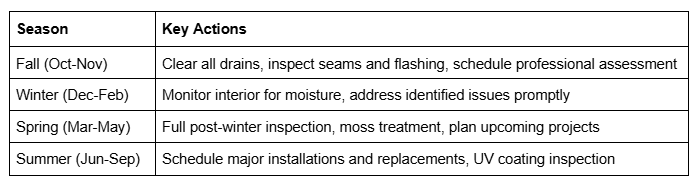
Consistent seasonal attention is what separates roofs that reach their expected lifespan from those that fall short by five to ten years. Commercial flat roof repair costs are significantly lower when issues are identified early rather than after interior damage occurs.
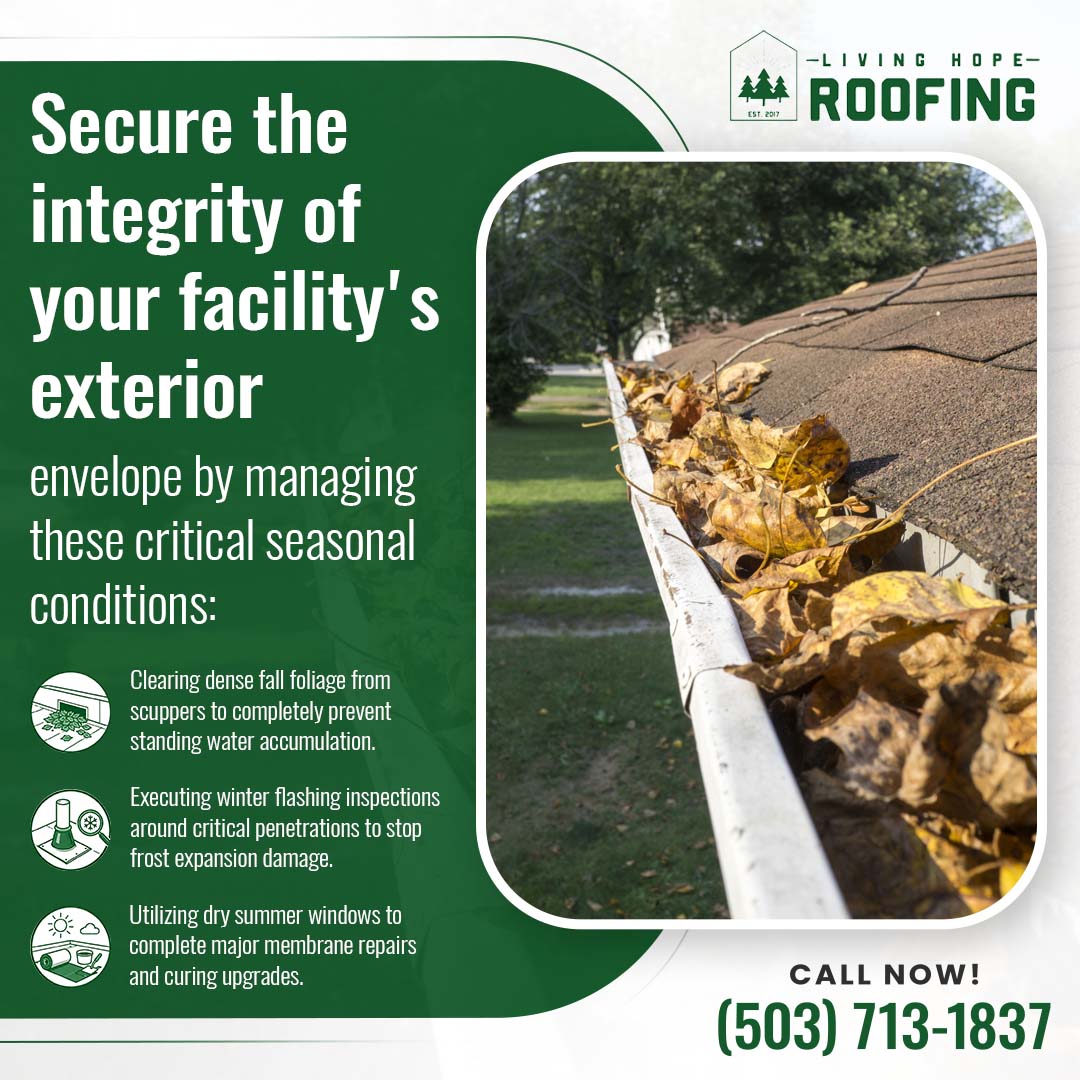
Protect Your Portland Commercial Roof with Living Hope Roofing
Portland's four seasons each bring specific challenges that directly affect how long your roof performs. Fall debris leads to winter drainage failures. Winter moisture compromises insulation and seams. Spring reveals what winter left behind. Summer offers the best window to address problems before they repeat.
Living Hope Roofing serves commercial and residential property owners across Portland, Wilsonville, Tigard, Lake Oswego, Tualatin, and nearby areas. As a fully licensed, bonded, and insured contractor certified by Owens Corning, we bring the local knowledge and hands-on experience to keep roofs performing through every season.
Whether you need a professional inspection, a targeted repair, or are planning a full commercial roofing installation, our team responds within 24 hours and provides detailed written estimates with no surprises. Call us at (503) 713-1837 or [email protected] to get started.