
Roof Moss Removal in Portland, OR: What Residential Roofing Contractors Actually Recommend
Portland homeowners know the rain comes reliably every fall and stays well into spring. What many do not realize is that the same wet weather that keeps the city green also drives moss onto their roofs season after season. Living Hope Roofing, a family-owned residential roofing company serving the Portland metro, sees the effects of moss damage firsthand on homes across the region.
Moss may look harmless from the street, but it actively works against your shingles, your gutters, and the structural integrity of your home. This guide walks you through what moss really does to your roof, how to remove it safely, and what residential roofing contractors recommend to help keep it from coming back.
Why Portland Roofs Are So Vulnerable to Moss Growth
Portland's climate creates near-perfect conditions for moss to establish itself and spread across residential roofs. From October through May, roofs stay consistently damp with limited sun exposure, especially on north-facing slopes and under tree canopy, making it difficult for shingles to ever fully dry out between storms.
According to Oregon State University Extension Service, moss on roofs in the Pacific Northwest is essentially inevitable given the region's moisture levels, and the most effective long-term solution starts with reducing shade by trimming nearby trees to let sunlight reach the roof surface. Understanding why Portland roofs are so susceptible is the first step toward protecting your home.
Key Conditions That Drive Moss Growth in Portland
Extended wet season:Eight-plus months of rain keep shingles damp for long stretches with little recovery time
Dense tree canopy:Douglas firs, bigleaf maples, and other large trees drop organic debris that traps moisture and blocks sunlight
Airborne moss spores:Moss travels by spore and can germinate on almost any roof surface
Limited sun exposure:North-facing slopes and shaded areas rarely dry out completely between storms
Cool temperatures:Mild winters keep moss active and growing rather than dormant
Once moss takes hold, it spreads quickly. A small patch can cover a large section of the roof within one or two rainy seasons without intervention.
What Moss Actually Does to Your Roof
Many Portland homeowners assume moss is a cosmetic issue. It is not. Moss actively damages roofing materials and can dramatically shorten the life of your roof if left untreated.
Residential roofing companies across the Pacific Northwest consistently report that moss-related damage is one of the most preventable sources of premature roof failure they encounter. Knowing the specific ways moss causes harm helps explain why early action matters.
Moss Lifts and Loosens Shingles
Moss grows upward and outward, working its roots under shingle edges as it expands. Over time, this physically lifts shingle tabs and breaks the seals that hold them flat. Once gaps form, water finds its way beneath the shingles, reaching the underlayment and roof deck, where rot and interior leaks can develop.
Moss Traps Moisture Against Shingles
Healthy shingles shed water quickly and dry out between rainstorms. Moss-covered shingles stay wet for days, sometimes weeks, during Portland's gray winters. That constant dampness softens asphalt, making it brittle and prone to cracking. Decomposing organic matter trapped against the shingles also creates acidic conditions that break down roofing materials faster than manufacturers anticipated.
Moss Shortens Roof Lifespan
Moss growth left untreated does not just cause surface-level wear, it works against the overall lifespan of your roof over time. The longer moss is allowed to retain moisture against your shingles and work its roots under shingle edges, the more it accelerates the kind of deterioration that leads to early replacement. What could have been a minor maintenance issue becomes a much costlier problem the longer it goes unaddressed.
Moss Blocks Proper Drainage
Thick moss acts as a barrier on your roof, preventing water from flowing freely into the gutters. Water pools behind moss patches, increasing the risk of leaks, interior water damage, and rot in the roof deck. During Portland's occasional winter freezes, water trapped by moss also expands as it turns to ice, cracking shingles and widening any existing gaps each time the cycle repeats.
Moss Can Affect Your Homeowner's Insurance
Oregon insurance providers have grown increasingly strict about roof maintenance. A moss-covered roof is frequently flagged during inspections, and claims related to moss damage may face challenges if documented, professional maintenance is not on record. Some carriers now use drone inspections to assess risk at renewal time.
Warning Signs You Have a Moss Problem
You do not always need to climb on your roof to identify a developing moss issue. Here are the signs to look for from the ground or a safe ladder position:
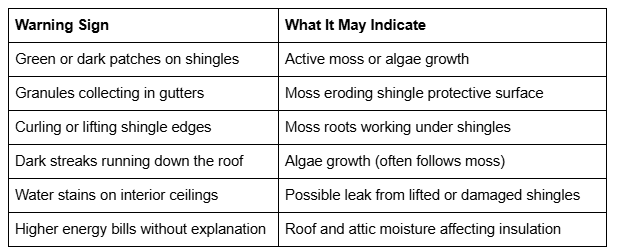
Inspect your roof at least twice a year. Spring and fall are the best times: spring to assess any winter damage, and fall to address growth before the wet season intensifies.
Safe Moss Removal: What Residential Roofing Contractors Recommend
One of the most important things residential roofing companies advise Portland homeowners on is what not to do. High-pressure washing strips protective granules from shingles, forces water under seams, and can void manufacturer warranties outright. Avoid it on asphalt shingles entirely.
Here is the step-by-step process that experienced residential roofing contractors use and recommend for safe, effective moss removal.
Step 1: Hand Brushing and Soft Removal
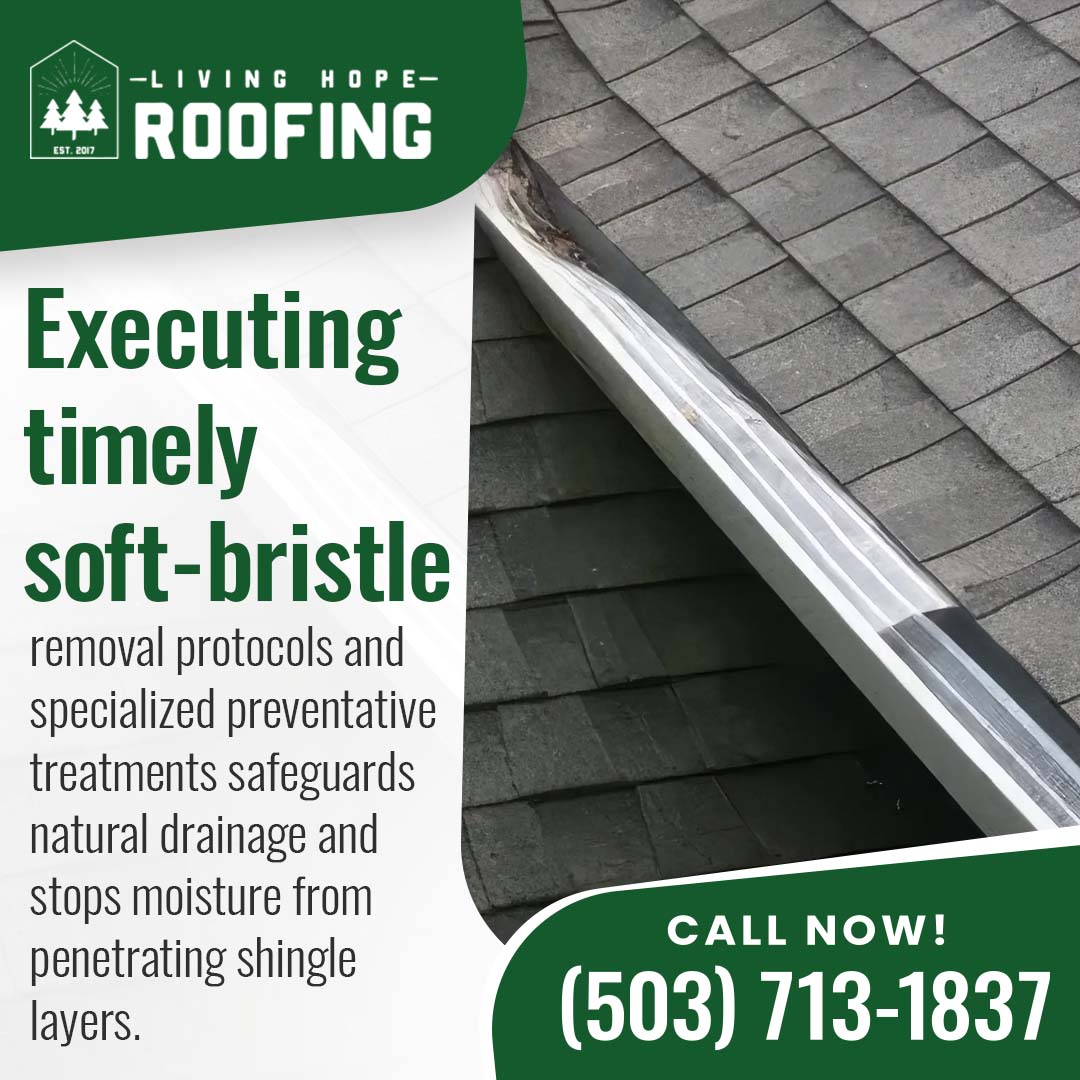
Visible moss clumps are removed using soft-bristle brushes. This removes the bulk of growth without damaging the shingle surface. This step alone does not solve the problem; it always needs to be followed by a chemical treatment to address roots and spores left behind.
Step 2: Moss-Killing Treatment
After brushing, a moss-killing solution is applied to the roof. Common options include zinc sulfate or biodegradable, eco-friendly formulations. These products penetrate moss roots and help prevent regrowth. In Oregon, applying certain moss treatment products requires a pesticide applicator license issued by the Oregon Department of Agriculture (ODA). Always verify that your roofing contractor holds the necessary credentials for chemical applications before proceeding.
Step 3: Preventive Treatment Application
No cleaning method removes 100% of moss spores. A preventive treatment applied after cleaning helps slow regrowth. Depending on your roof's exposure to shade and moisture, this treatment is typically reapplied every one to three years for best results.
At Living Hope Roofing, we use low-pressure, shingle-safe methods on every job to protect both your roof and its warranty coverage.
DIY Moss Removal vs. Hiring a Professional
For light moss growth with minimal shingle lifting, some Portland homeowners choose to handle removal themselves. If you go the DIY route, use a soft-bristle brush, work on dry days, and always use proper fall protection before stepping on any roof surface.
That said, professional help is the safer, more thorough option in these situations:
Moss growth is heavy or covers a large section of the roof
Your roof has a steep pitch or limited safe access points
You suspect there may already be underlying shingle or deck damage
You want documentation for your homeowner's insurance
You have not had a roof inspection in the last two years
A professional from a licensed residential roofing company can also assess whether moss has already caused shingle damage that needs repair alongside the cleaning, something a DIY approach will miss. Living Hope Roofing offers free roof inspections, so there is no risk in getting an expert opinion before deciding how to move forward.
How to Prevent Moss from Returning
Removal alone is not enough. Because Portland's climate is so favorable to moss, preventive steps are what keep it from coming back season after season. Professional residential roofing in Portland involves advising homeowners on long-term maintenance, not just one-time fixes.
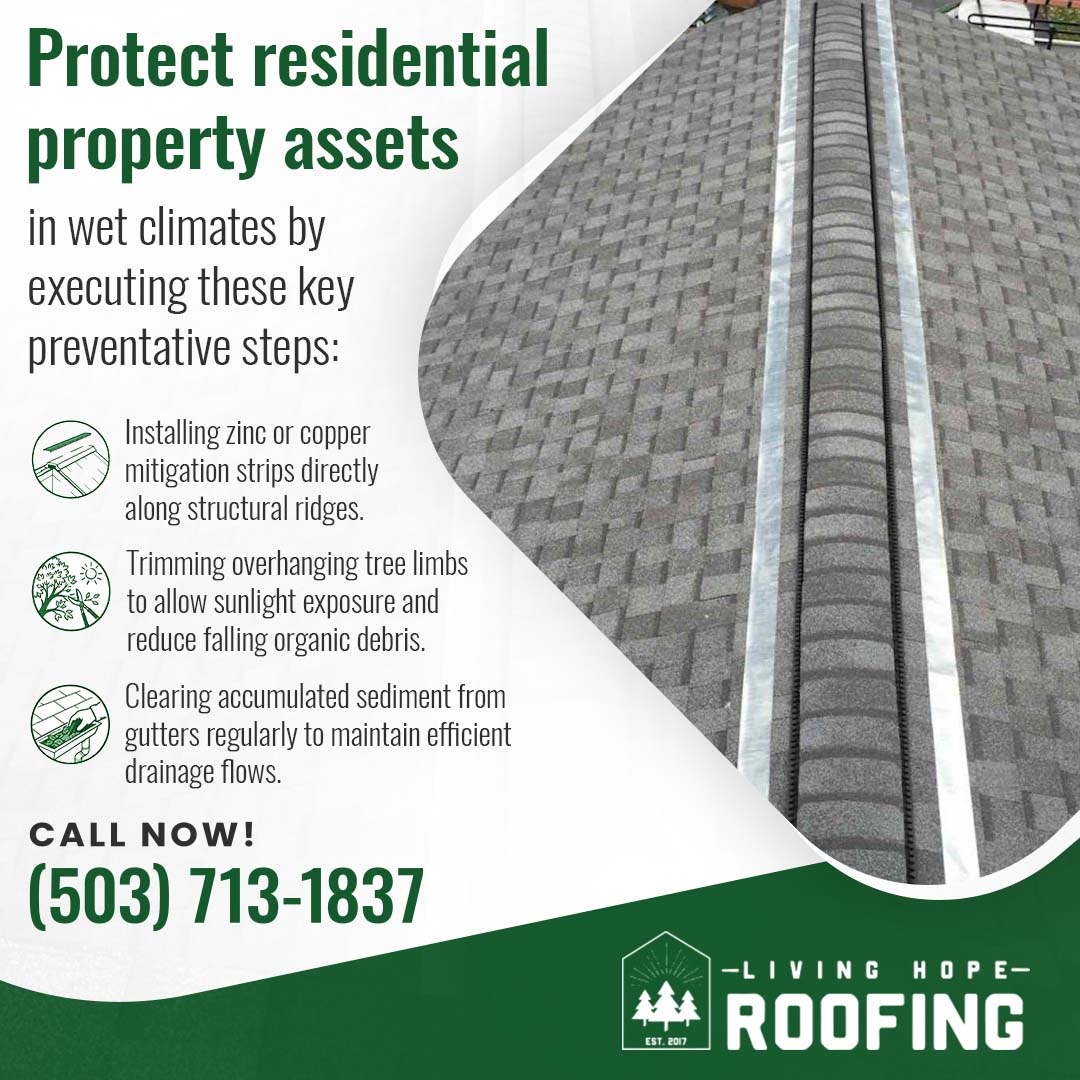
Install Zinc or Copper Strips
Zinc or copper strips installed along the roof ridge release metallic ions during rainfall. Those ions wash down the surface and create conditions that inhibit moss and algae growth over time. This is one of the most reliable long-term prevention methods available.
Trim Overhanging Tree Branches
More sunlight on your roof directly translates to less moisture retention. Cutting back overhanging branches gives shingles a better chance to dry out between rainstorms and reduces the organic debris that feeds moss growth. Even small improvements in sun exposure can make a noticeable difference in how quickly moss returns after treatment.
Keep Gutters Clean and Clear
Clogged gutters back up water against the roofline, and that standing moisture accelerates moss growth along the eaves. Clean your gutters at least twice a year, more often if your home sits under large trees.
Improve Attic Ventilation
Proper attic ventilation reduces moisture buildup beneath your shingles. A drier roof system is less hospitable to moss spores. If your attic runs unusually warm in summer or retains moisture through winter, a roofing inspection can assess whether ventilation improvements are warranted.
Schedule Regular Roof Inspections
The most cost-effective approach is catching moss early. A professional inspection every one to two years helps you identify growth before it reaches the point of shingle damage. Routine cleaning is also far more affordable than repair or early replacement.
When Moss Points to a Bigger Roofing Problem
Sometimes moss is a symptom of a deeper issue. If your roof is consistently damp due to poor ventilation, failed flashing, or worn underlayment, moss will keep coming back regardless of how diligently you treat it.
Signs that moss may be connected to underlying damage include:
Soft or spongy areas when walking on the roof surface
Shingles that are visibly warped, cracked, or missing granules across a wide area
Interior leaks that return after each round of heavy rain
A roof that is 20 or more years old
In these cases, moss treatment is not enough on its own. A thorough inspection by a licensed residential roofing contractor will determine whether targeted repairs can extend the roof's life or whether replacement is the more practical path forward. Our team at Living Hope Roofing will give you an honest, straightforward assessment: no upselling, no guesswork.
What to Look for When Hiring Residential Roofing Companies in Portland
Choosing the right contractor is just as important as the work itself. Here is what to verify before hiring anyone for residential roofing in Portland:
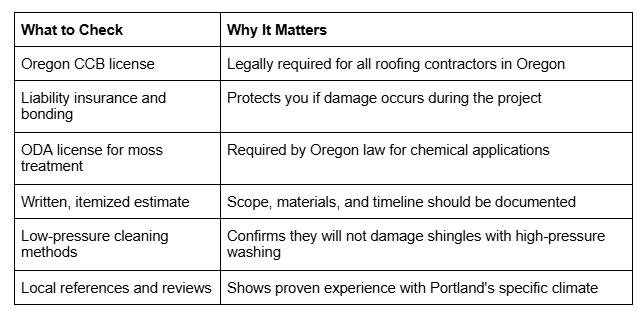
Never hire a contractor who recommends pressure washing on asphalt shingles, and always get the scope of work in writing before any project begins.
Protect Your Portland Home with Living Hope Roofing
Moss is manageable when addressed early, but it becomes costly when ignored. Routine prevention and timely removal are among the highest-return maintenance investments Portland homeowners can make to protect their roofs and avoid early replacement.
Living Hope Roofing serves homeowners across Portland and nearby areas, including Wilsonville, Tigard, Lake Oswego, and Tualatin. As a licensed, bonded, and insured family-owned business, we provide thorough roof inspections, honest assessments, and quality residential roofing services built for the Pacific Northwest climate. Our team will walk you through exactly what your roof needs. Call us at (503) 713-1837 or email [email protected] to schedule your free inspection and estimate.