
Commercial Roof Inspection Schedule: How Often Do You Need One in Portland?
A flat roof needs a check soon after installation, then a twice-a-year inspection schedule after that, in spring and fall. This is the baseline that the National Roofing Contractors Association (NRCA) recommends for flat and low-slope commercial roofs. At Living Hope Roofing, we build both the post-installation check and the seasonal schedule into every commercial roofing installation project we complete.
How Soon After Installation Should a Commercial Roof Get Its First Inspection?
A new flat roof still needs a follow-up look, even though it hasn't had time to wear down. Most commercial roofers agree that an inspection soon after an installation confirms the work matches manufacturer specifications and catches anything that may have been missed during the build, such as an improperly sealed seam or a flashing detail that needs adjustment.
A commercial roofing installation company that skips this step is relying on the final walkthrough alone to catch every issue, which is a lot to ask of one pass.
How Often Should a Flat Roof Be Inspected After That?
Once the roof clears its first check, the NRCA recommends inspecting it twice a year, in spring and fall. The spring visit looks for damage from winter weather. The fall visit prepares the roof for the rain and wind that follow.
Sticking to this cadence gives small problems, like a lifted seam or a slow drain, a chance to get caught before they turn into a leak that needs commercial flat roof repair.
What Counts as Ponding Water, and Why Does It Change the Schedule?
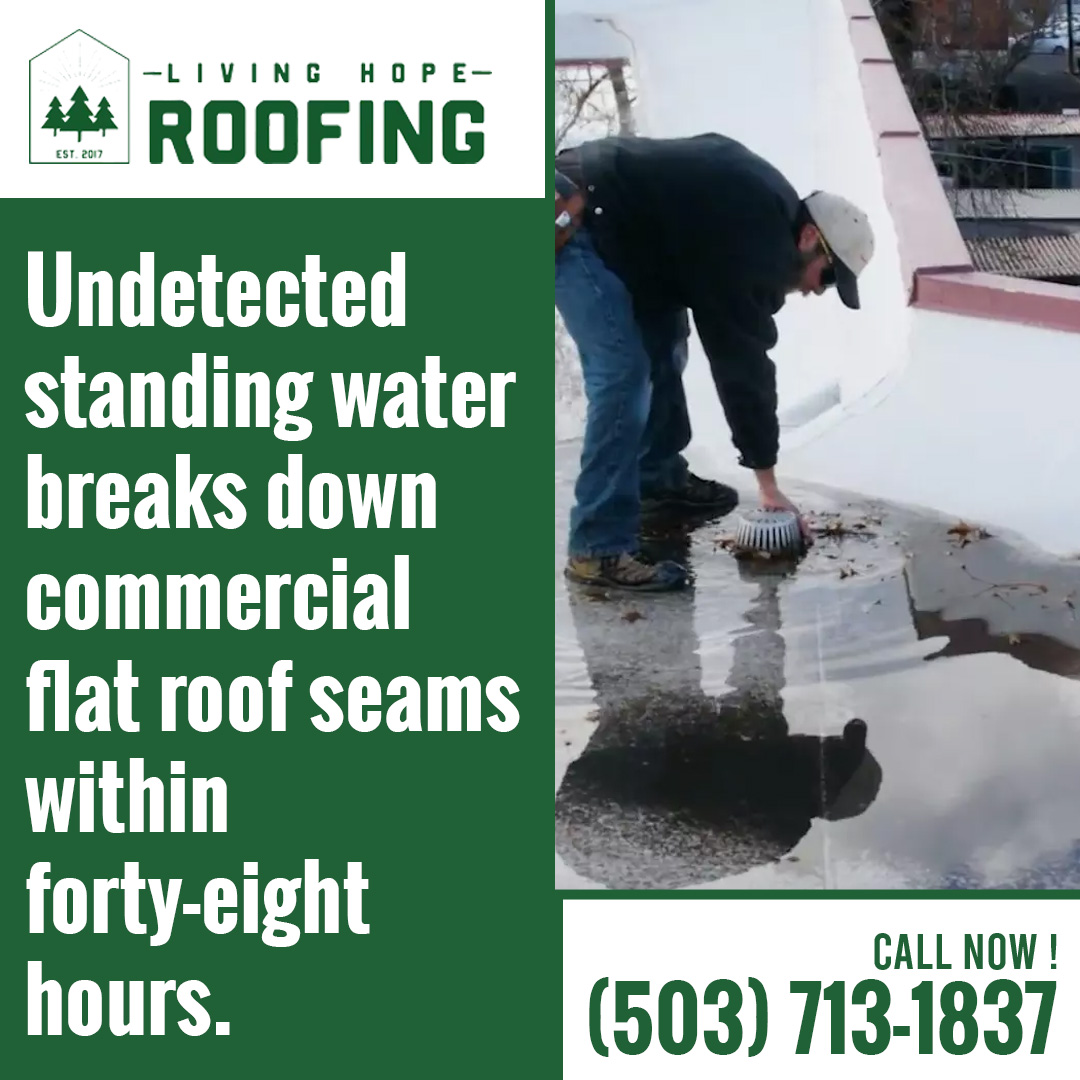
The NRCA defines ponding water as water that stays on a roof surface for more than 48 hours after a rain event ends. Ponding past that point can soften seams, add unplanned weight to the roof deck, and shorten the membrane's service life.
If ponding shows up, it's a signal to schedule a professional inspection as soon as possible, rather than waiting for the next seasonal visit.
What Storm Conditions Should Trigger an Extra Inspection?
The National Weather Service classifies a severe thunderstorm as one that produces hail of 1 inch or larger, wind gusts of 58 mph or higher, or both. If a storm meets either threshold, we strongly recommend scheduling a professional roof inspection to assess for any potential damage, even if no leaks are immediately visible.
Other situations worth an inspection between scheduled visits:
Any rooftop work by HVAC, solar, or plumbing crews
A new interior stain, ceiling leak, or musty smell
Visible punctures, torn seams, or lifted flashing
Standing water that hasn't drained after 48 hours
Inspection Schedule at a Glance
Frequently Asked Questions
Does a professional inspection require going onto the roof?
Yes, in most cases. A thorough inspection means walking the surface to check seams, flashing, drains, and penetrations up close.
Can a building owner do their own roof checks between professional visits?
A quick visual check from a roof hatch is a fine supplement, but it isn't a substitute for a seasonal inspection by a roofing professional.
Does the inspection schedule change for a roof with rooftop solar panels?
Solar installations add more penetrations and foot traffic, so ask your contractor whether panel mounts and surrounding flashing need extra attention each season.
Get Your Roof on a Schedule
If your building's roof hasn't been checked since installation, or it's due for its spring or fall visit, our team at Living Hope Roofing can walk it and put together a written report. As a commercial roofing installation company serving the greater Portland area, we handle everything from post-installation checks to commercial flat roof repair when a problem turns up. We serve Portland, Wilsonville, Tigard, Lake Oswego, and Tualatin. Call (503) 713-1837 or [email protected] to schedule a free inspection.